Oxford Special – Ancient footprints, a retired fox and having carrot cake with a big spider (Part 4)

Let There Be Dinosaurs!

On this rainy day your first glance doesn’t fall on the lawn you are crossing but on the entrance of Oxford University Museum of Natural Science, the OUM, which is your friends’ favourite museum in Oxford and surroundings. They ardently assure you that there are few better ways to spend a day in Oxford than a visit to the OUM. Its holdings – which run into millions of specimens – include a gigantic Tyrannosaurus Rex skeleton and a stuffed imitation DODO which provided some of the inspiration for Oxford’s most famous child and book, namely Alice in Wonderland. But right now, your friends somewhat hesitate as if they were waiting for some kind of emotional reaction from you. What am I supposed to do, you think, and follow their eyes’ direction. You see them staring purposefully at the lawn and, politely you, too, turn your attention to the grassy visiting card of the famed museum. Well, the grass is green, even today, and all in all, the turf looks well-groomed which is exactly what you expect from such a prominent British lawn. But then you gasp in horror – one, two, no, a legion of irregular, large mud-holes are meandering across the turf right towards you. What the heck has happened here? Has OUM sacked the gardener and he took a cruel revenge?

Ancient Footprints

Jurassic Footprints

Instantly you are set right! To talk of mud-holes when you actually, eh, at least spiritually, watch a dinosaur striding across OUM’s lawn – blasphemy! What you really see are the giant footprints of Megalosaurus, Oxford’s very own and very special dinosaur!

The fossils, including the Megalosaurus jaw, which is also held in the Museum’s collection, were found in a quaint quarry just outside Oxford. The ancient prints which today span the lawn in front of the museum are modern casts from the fossilised trackway that Megalosaurus bucklandii,  a three-toed carnivore, left some 166-168 million years ago when he roamed the lagoons of Jurassic Oxfordshire! You immediately fall in love with the muddy footsteps and enter the museum in high spirits.
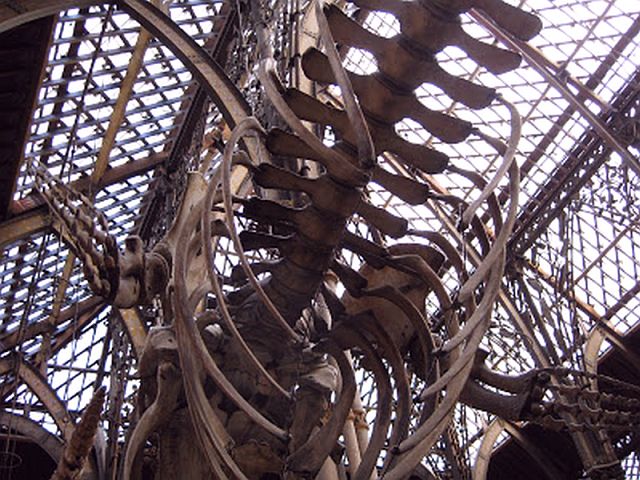
Dinosaurs and Ironworks

Dinosaurs and Ironworks

Dinosaurs in Ironwork Jungle

The architecture of the place is breathtaking. Entering the main court, you first notice how very high and light the structure is, like the nave of an enormous gothic church, but relieved from the weight of stony pillars. Instead, the vaulted glass roof is held aloft by an elaborate system of cast and wrought ironwork, the modern building material of the 19th century. The slender pillars are artfully decorated with botanical ornamentation –  a fanciful iron jungle for Megalosaurus and his relatives!


It is reported that John Ruskin, famous builder of the Museum of Natural History, was so taken with the neo-gothic, ironwork architecture that he visited the new OUM every day just to admire the beauty of the place – such as people have done since then unto nowadays.
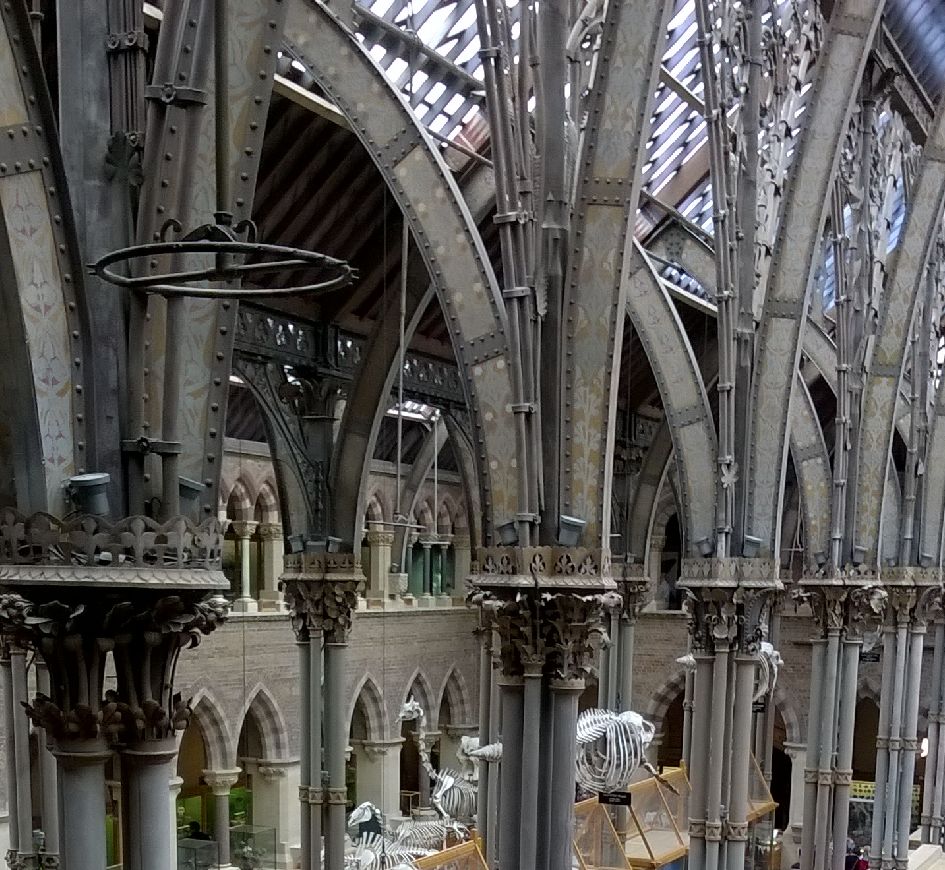
Iron Jugngle

Iron Beauty


Please Touch!

There are fierce animals and lovable ones! The OUM is free of charge and offers fabulous educational programmes, no wonder that the main court is brimming with voices and happy activities of children and parents. Similarly, the outstanding touch-and-feel areas are enjoyed by children and adults alike. Right at the entrance desk a ‘retired’ fox is so adorable that you want to stroke it as much as all the kids do! My friend relates the story of a girl who came for weeks and months just to give this fox his daily cuddle. Surprising, that the soft and silky coat isn’t worn down by all the pettingAdorable Fox.
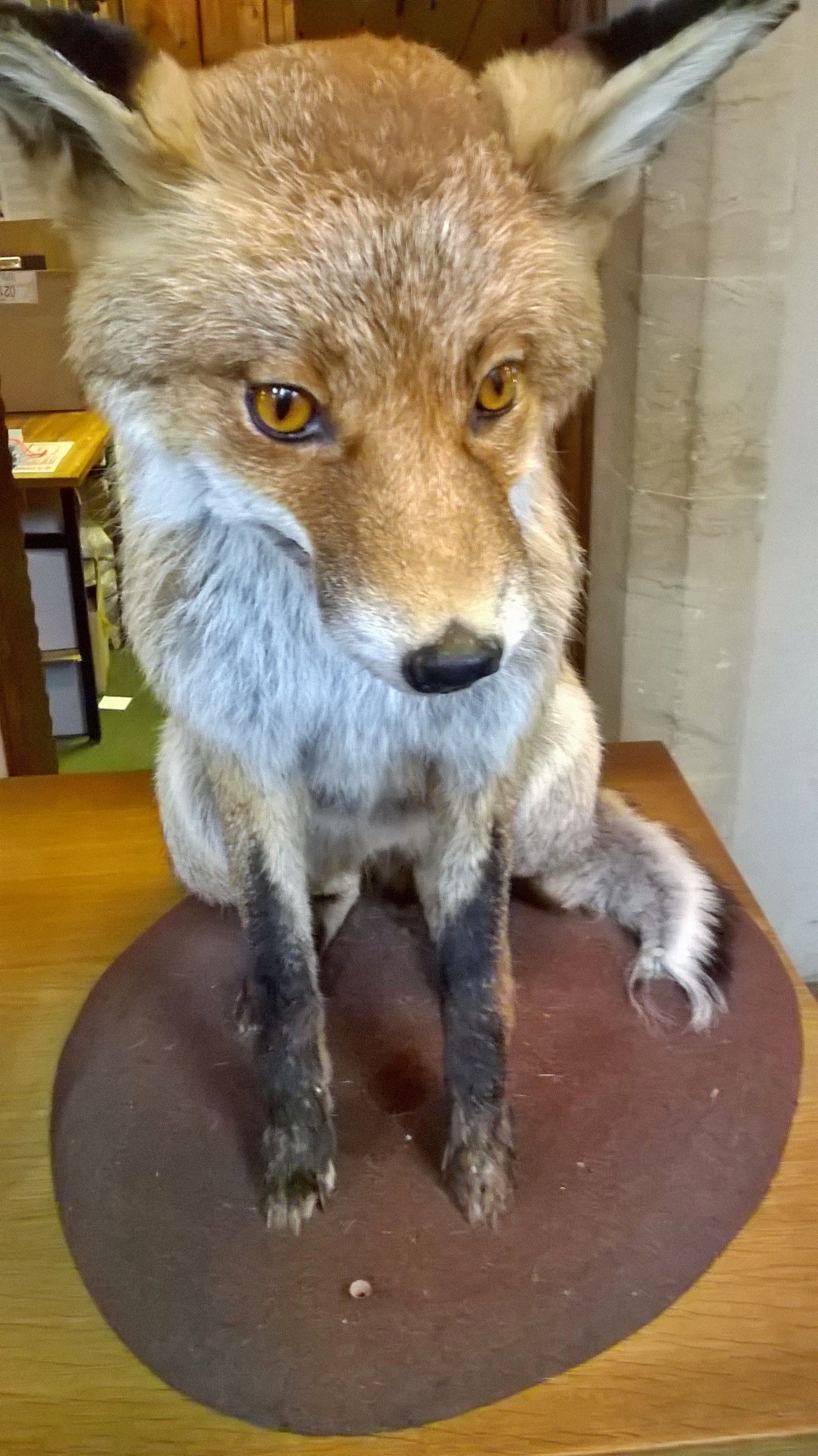


Lovable Retired Fox

Lovable Fox!


Spiders and columns with your carrot cake

The museum cafe is situated on the upper gallery which is overlooking the dinosaurs in the main court and which lifts your body and mind up into the spheres of pure bliss. Take a seat at one of the wooden tables along the stonework of the first-floor gallery  and admire the neo-gothic arcade and the column chiseled from decorative rock that is right next to you. Each of these columns, which are surrounding the court on the ground floor as well as the first-floor galleries, was made from a different kind of British rock. Each of their capitals and corbels are intricately carved with flora and fauna, beautiful lessons in geology, botany, masonry, art, history… and in inspiration. You could spend hours of inspecting the stones if there were not the big spider right next to your coffee pot. Don’t worry, she just wants to watch, I am assured, and I happily share the delicious coating of the carrot cake with my human friends, only!
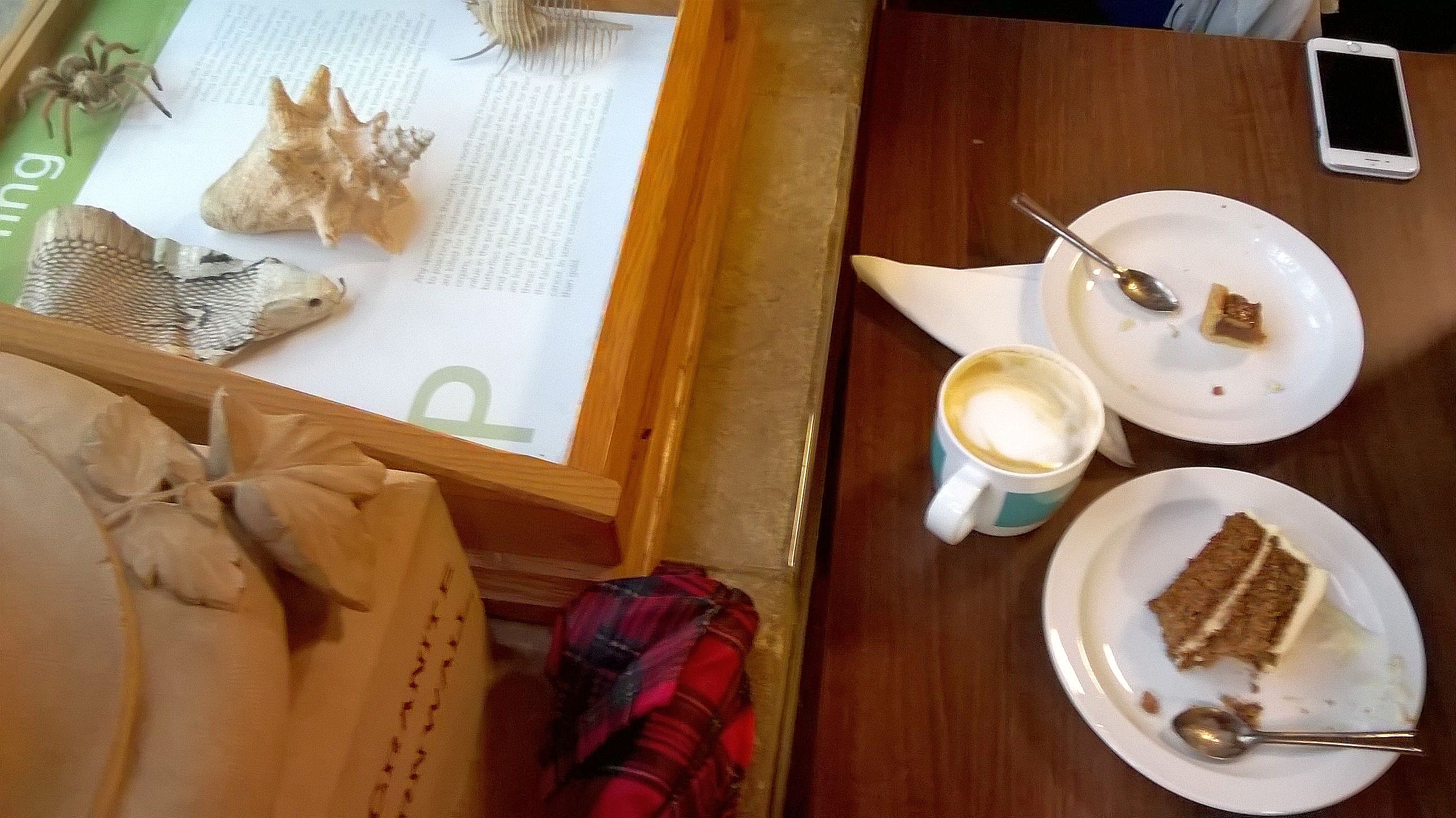
Big Spider and Carrot Cake

Friendly Spider and Decorative British Rock


Oxford Special – OED, Emo, Globes and Teaching (Part 3)

I am not a ‘Twitterati’ but this fantastic word was among the 500 (!) new words which were added to the OED, the Oxford English Dictionary, in June 2015. Sounds like ‘Illuminati’ and stands for people  on Twitter who have myriads of followers and block your Twitter feed with constant tweeting – they are the Illuminati of our present Twitterworld!

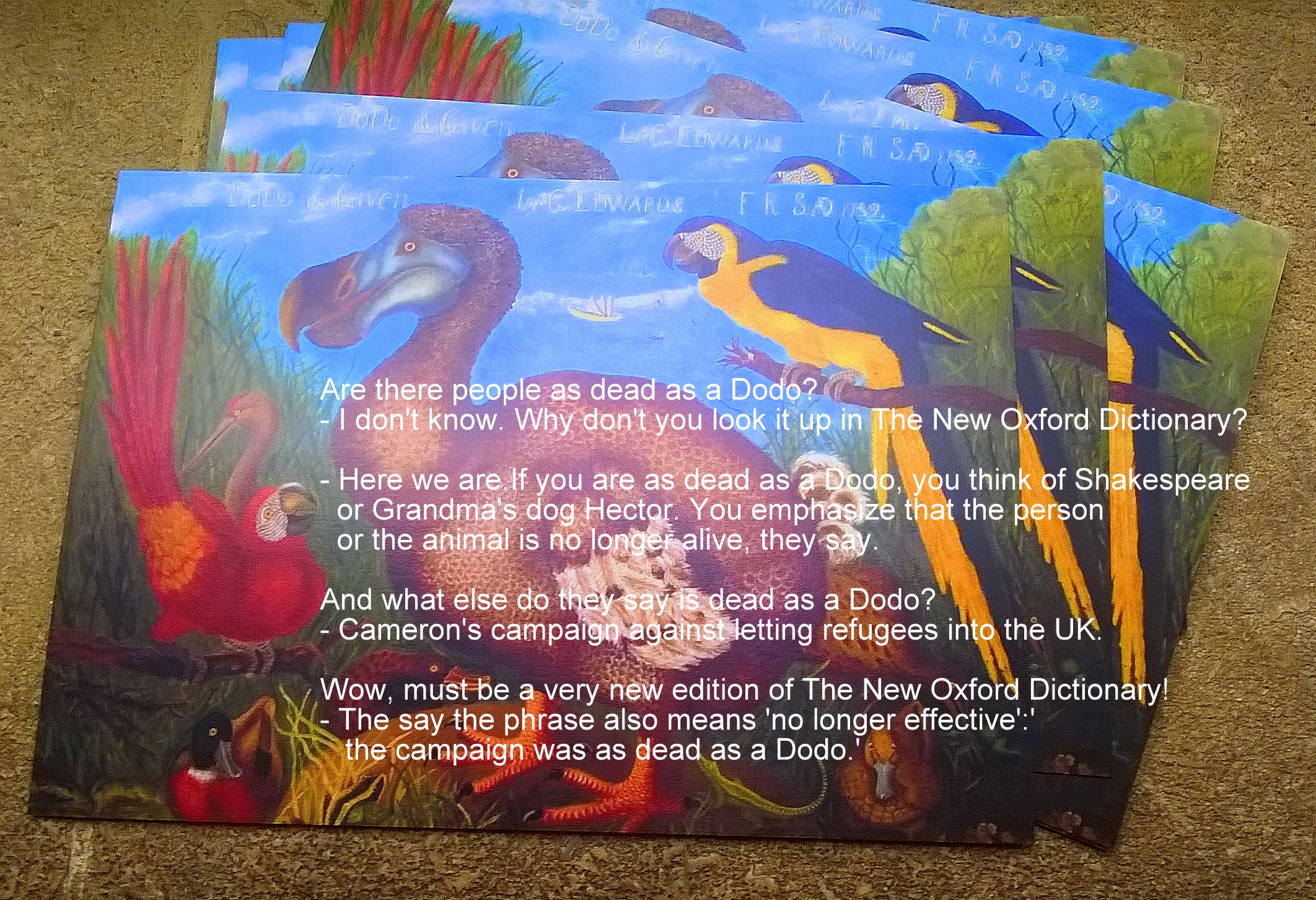
Even if you don’t know anything about Oxford great sights, this OED, the extremely successful Oxford English Dictionary, will have come across your path. It has had thelast word on words” for more than a century and is the largest dictionary of the English language. Not just because it adds words like ‘Twitterati’ year by year but because it aims to include all vocabulary from the Middle English period (1150 ad) onward! In 1879 the London Philological Society made an agreement with the Oxford University Press to work on a New English Dictionary. By the way, Oxford University Press started in the childhood of printing – the first book was printed in Oxford as early as in 1478! But back to the OED. The new dictionary was planned as a 6,400-page work in four volumes. Five years later, the wordworkers had reached the word “ant” under the letter A, in 1906 they had succeeded as far as the letter M, and no further! The scholarly advance at snail’s pace demanded for a shorter intermediate solution in the form of  the Concise Oxford Dictionary which was compiled by Henry Watson Fowler and published in 1911. Its title was changed into Concise Oxford English Dictionary in 2004 and the centennial 12th edition was published in 2011.This edition contains 1,682 pages of dictionary text and 66,500 headwords – so you will certainly find the phrase ‘as dead as a Dodo’. Hopefully, you will use it adequately ever after (a fitting example is given below in the dialogue). And yes, Dodo may be extinct, but Dodo is not dead as the saying insinuates. Beloved Dodo is very much alive in the minds of all Oxford children and all the visitors of OUM of Natural Science!

Phrases with "Dodo"

Pretty postcards of “Dodo”  in OUM of Natural Science – why not look up ‘Dodo’ and ‘OUM’ in the OED!

With the oldest university in the English-speaking world, Oxford is a unique place. Historians tell us that teaching (and learning!)  already existed at Oxford in 1096 – probably even before – and when 130 years later Henry II banned English students from studying in Paris, Oxford University developed so rapidly, that  just a few decades later it attracted even foreign students! In 1190, the first known overseas student, Emo of Friesland, arrived at Oxford University and started Oxford’s great tradition of international links. Until today, students from all over the globe have been attracted by Oxford’s colleges just like Emo 825 years ago. Australian Elodie, for example, a 2015 student of Magdalen College, is deeply awed by Oxford’s incredibly long history: “You can buy an ethernet cable from a shop which was established before Australia was even colonized“, she exclaims. How could one illustrate the layers of history and the winds of time any better! But it won’t take Elodie ten years to return to Australia as it happened with Emo who left Oxford not earlier than in 1200 for his native Friesland in Northern Holland!

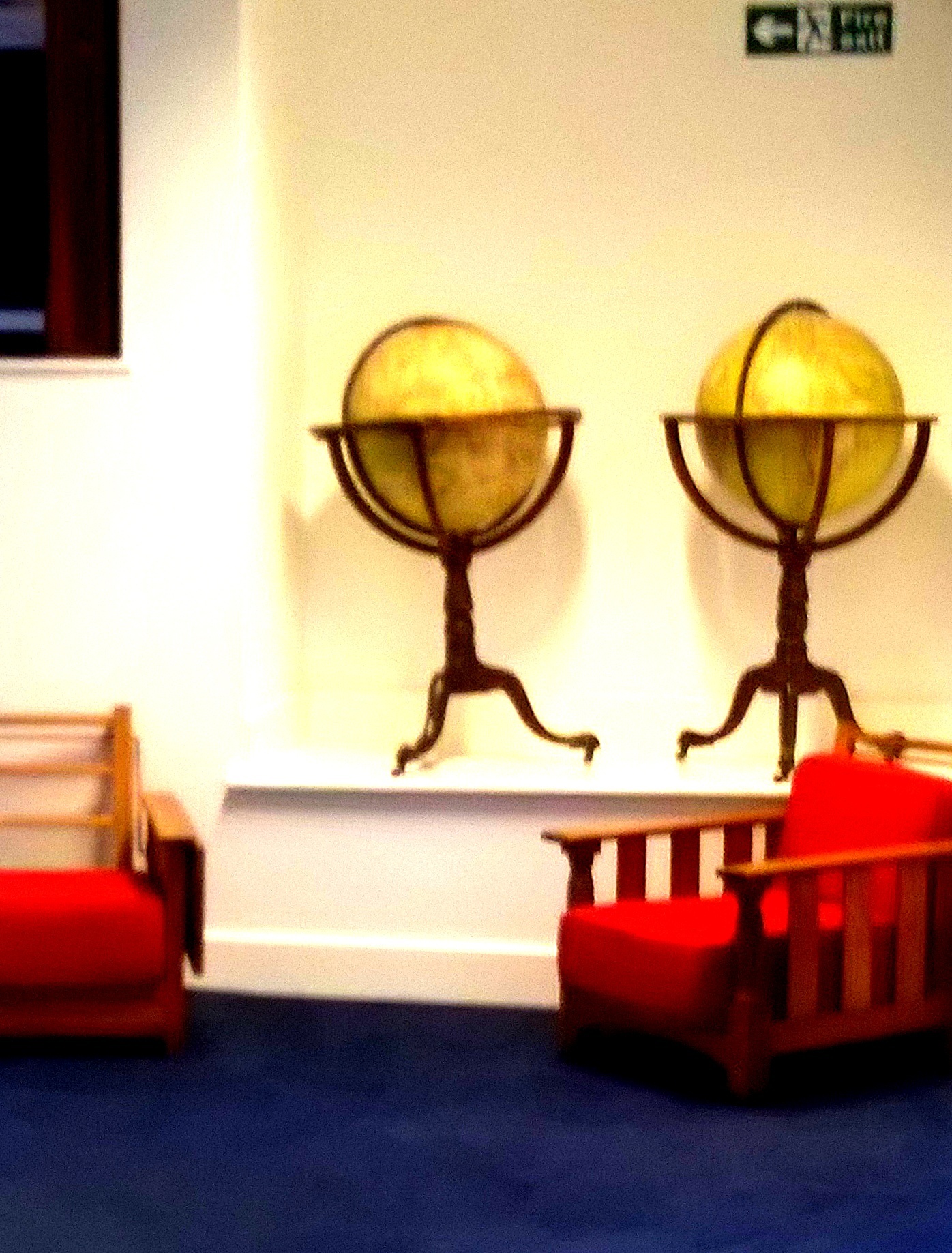
After all that paddling back into history we have arrived at Oxford University Centre for the Environment where I am delighted to take a glimpse into the School of Geography and the Environment! Globes plus maps plus brand-new perspectives in environmental research projects – all this involves anticipating and shaping the future! Right round the corner of the staircase, I have a peaceful encounter with two dancing globes – I pretend not noticing that they appear somewhat tipsy. Later, I find the source of their good spirits: a big, fat globe which contains a secret bar!

Two tipsy-curvy globes dancing together at the School of Geography and the Environment

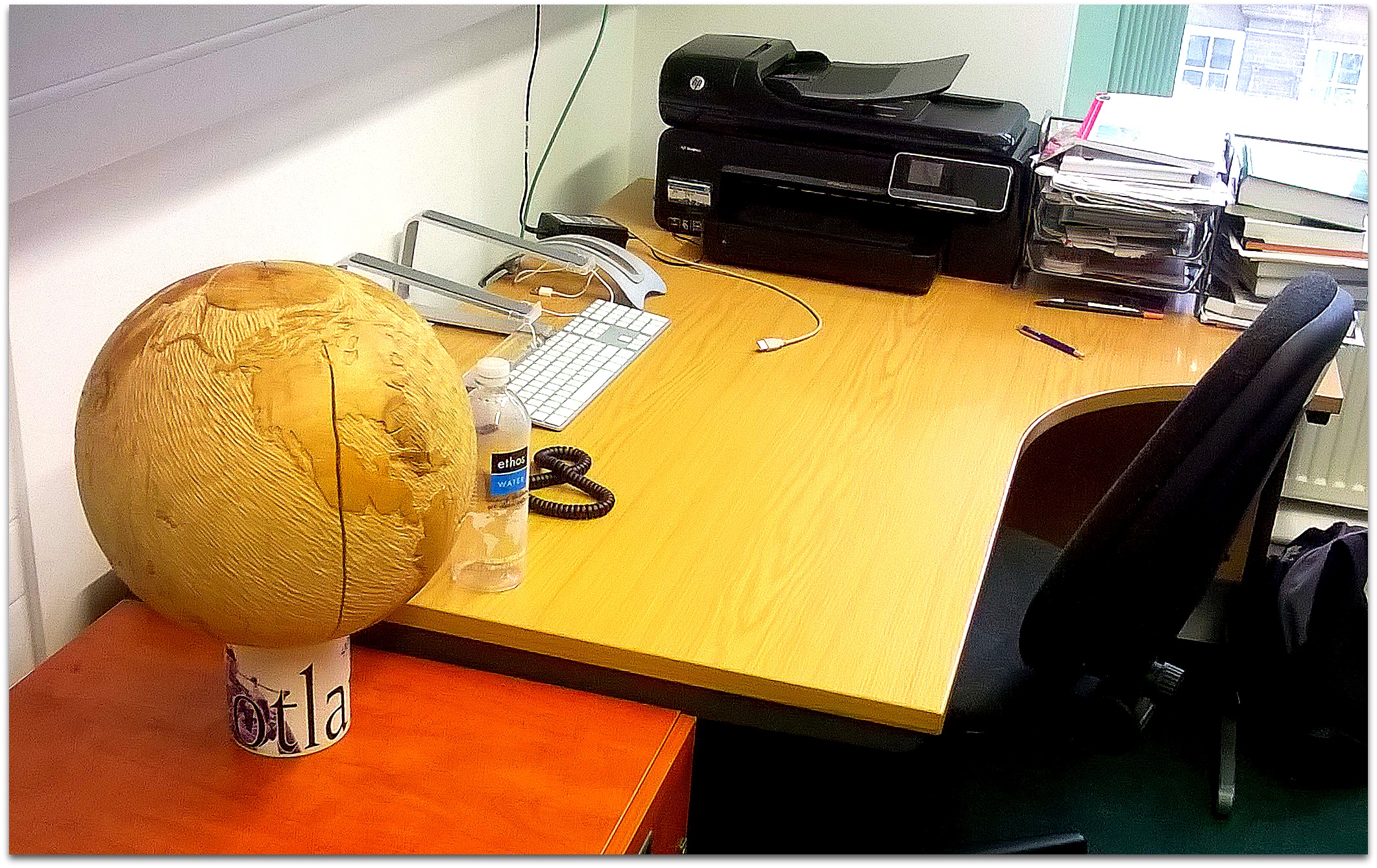
The wooden globe that I am to meet some rooms further on, is much too heavy for dancing. ‘He’ looks very sober and steadfast and I do hope ‘he’ doesn’t know about the bold family members down the hall!

Sober globe, standing steady at the School of Geography and the Environment

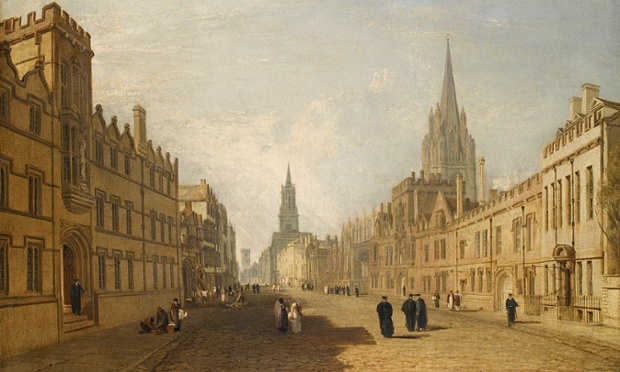
As we are back to the streets, alleys and lanes of Oxford the rain has changed into to a fine drizzle which we welcome as a meteorological turnaround. My friends point out the beautiful old colleges and churches to me, it seems as if the limestone buildings claim to have been patronized by Shakespeare himself. Isn’t it a shame, you think to yourself, that  Edward de Vere, 17th Earl of Oxford, who some experts believe to have been the “real” Shakespeare, has nothing to do with Oxford University. Instead, he entered Queen’s College in Cambridge! He did so at the age of eight – perhaps he would have chosen his namesake school at an older age. But, fans and friends of Oxford, relax! It is Oxford which is mentioned as an outstanding university in Shakespeare’s plays, not Cambridge! Read Shakespeare’s lines from Henry VIII below the beautiful painting of Oxford High Street by Turner.

Turner's Oxford High Street

William Turner’s Oxford High Street

“Those twins of learning that he raised in you,
Ipswich* and Oxford! One of which fell with him,
Unwilling to outlive the good that did it;
The other, though unfinish’d, yet so famous,
So excellent in art, and still so rising,
That Christendom shall ever speak his virtue.  ( Act iv, Sc. 2)

 *Sorry, Ipswich!

It’s Griffith, the attendant of Queen Catharine, who praises the qualities of Cardinal College in Oxford and predicts that Cardinal College is so excellent that Christendom will ever speak the virtue of its students. Right you were, Griffith – old Cardinal College became Henry VIII College and now is Christ Church College!

By the way, in Shakespeare’s days, Oxford as well as Cambridge University showed only contempt for the works of the great author. His plays were only performed by the “town”, not the “gown”. When students were caught attending one of those forbidden theatre events, they were severely punished. From preserved notes of some students who luckily weren’t caught while watching Shakespeare’s Othello, performed in 1610 by the King’s Men in the Oxford Guildhall, we can deduce that the students had a better understanding of the play’s power than their dignified teachers!

Oxford Special – Where the oxen trots and the river flows (Part 2)

The Ox and the Ford

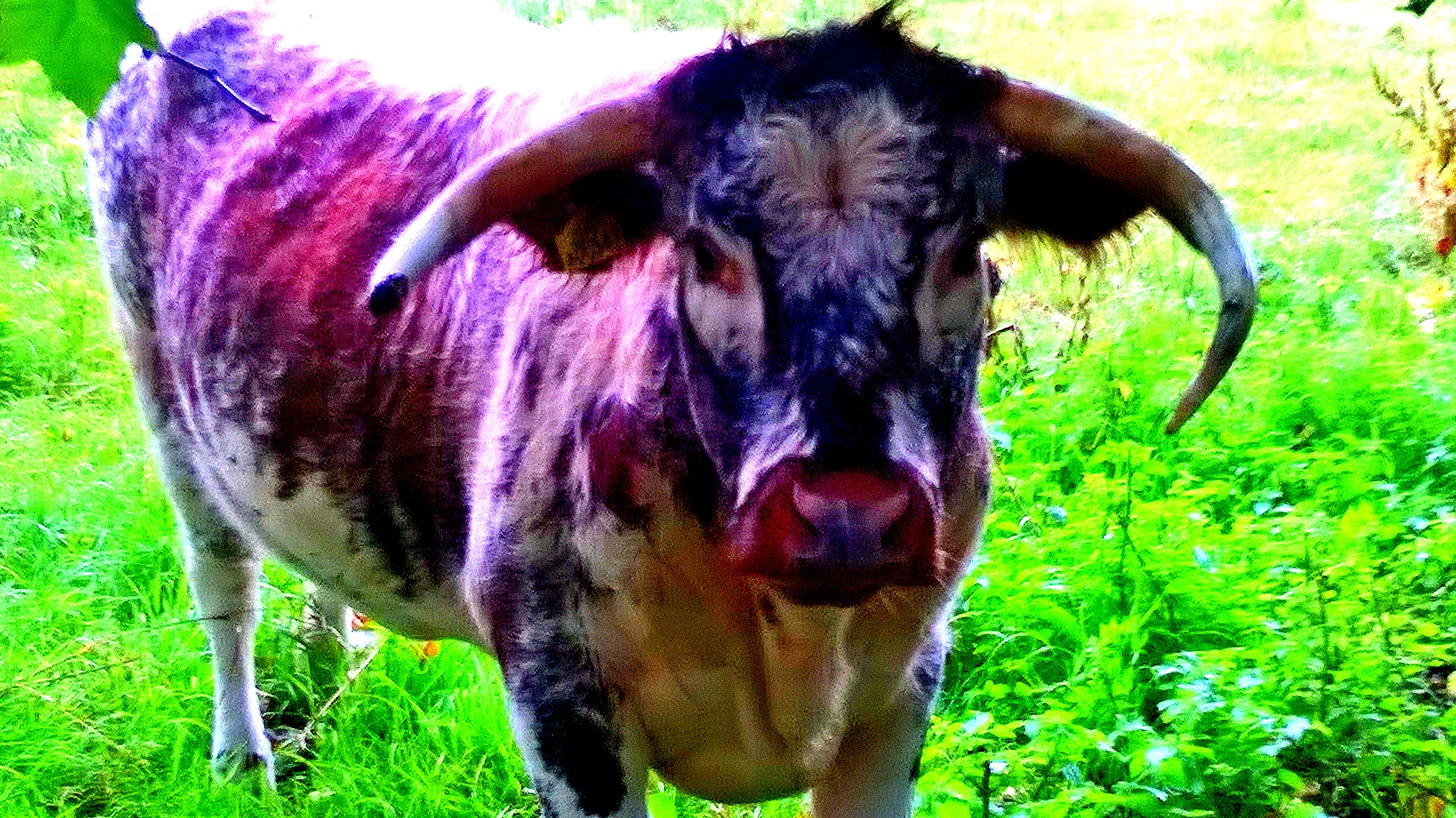
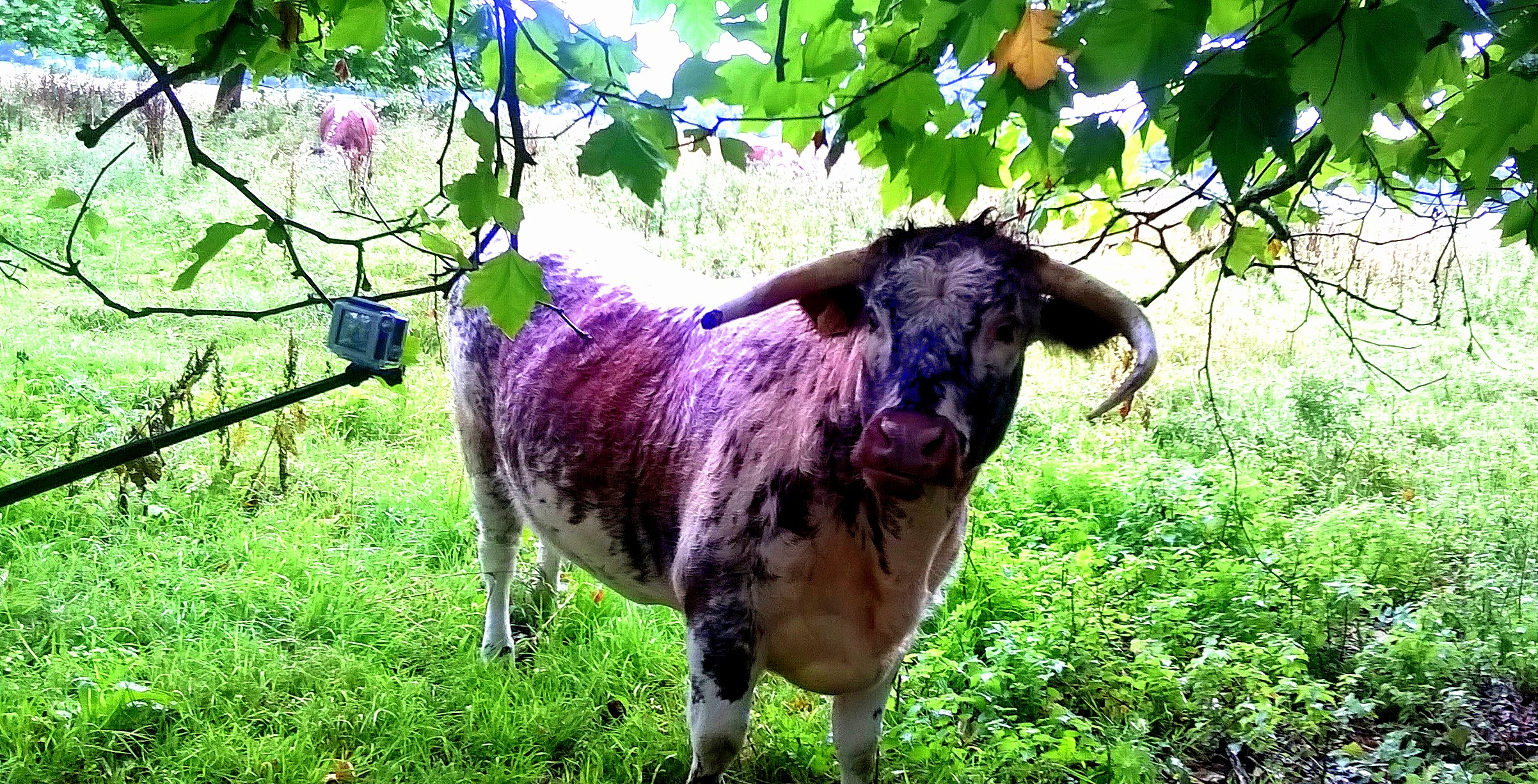
After an exceedingly pleasurable breakfast at friendly Oxfork’s we set off on an Oxford walking tour which first takes us to the Thames path opposite the boat houses,”along the reedy shore of silt and mud”, and next to the oxen. We meet the mighty bull in form of a good-tempered English longhorn on the vast green meadows of Christ Church College.

English Longhorn eye-to-eye

Eyeball-to-eyeball with a Christ Church longhorn!

Even an intrusive Spanish selfie stick cannot disturb the oxen’s spirit of pastoral holiday on Christ Church Meadow, which is for sure the most cultural pasture in the whole Commonwealth. Still, you may detect a stubborn bewilderment in the beast’s cocked head as the selfie stick is getting too pushy.

English longhorn not being amused about Spanish selfie stick

English longhorn not being amused about Spanish selfie stick

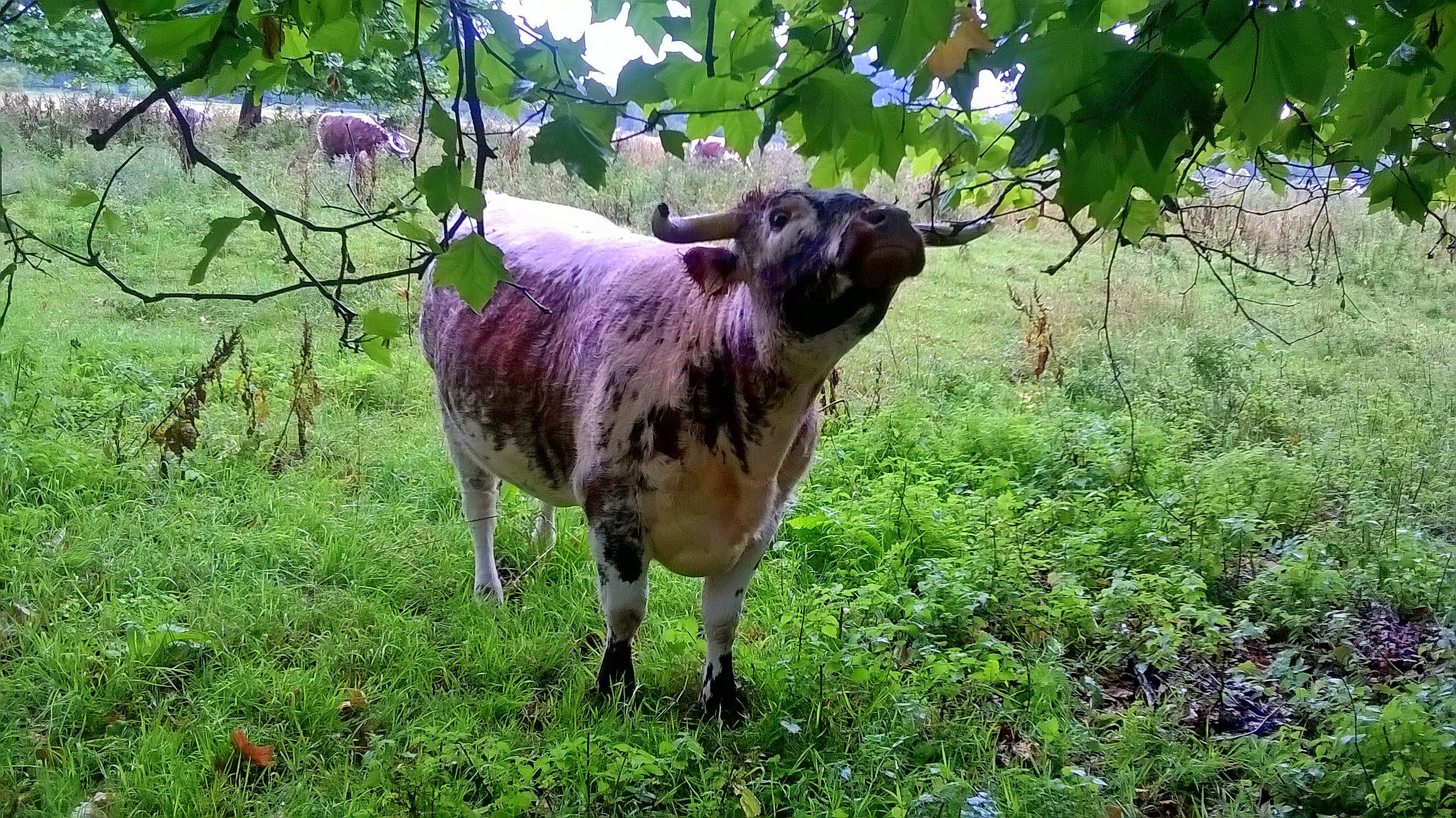
You count some 9 cows which all belong to the small herd of Christ Church College and are allowed to enjoy their famous pasture without labor or the prospect of being turned into food for the college students some day. In turn, they please native Oxonians, students and tourists alike with their friendly cow manners.

Christ Church Longhorn, studying a tree

Christ Church Longhorn, studying a tree

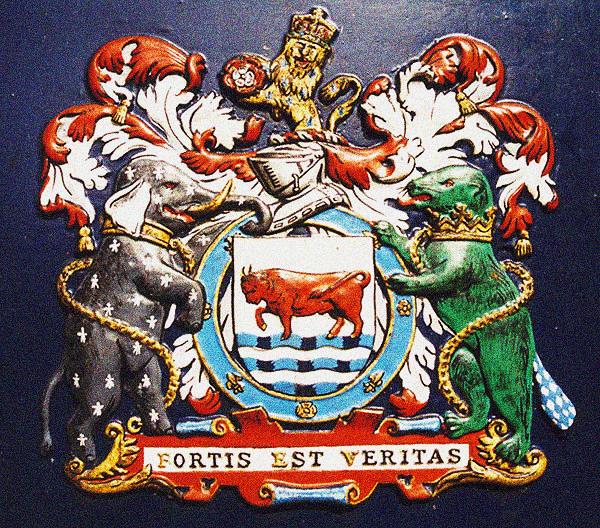
Nowadays, everybody knows that Oxford’s name derives from the Anglo-Saxon ‘Oxnaforda’, which means “a ford for oxen”. The Middle English version, ‘Oxenford’, was shortened by time and use to Oxford. The latinized form is Oxonia, something worthwhile knowing in such a learned place! Later, I am allowed a glance at Oxford’s coat of arms and ready to despair at such a gaudy masquerade of (1) a star-spangled black elephant in chains, (2) a Bavarian-tailed, grim beaver with a crown round its neck, (3) a suit of armour bereft of its knight, and (4) a happily grinning lion with a crown on its head, and holding up another coat of arms! Not to speak of (5) all those flowery feathers and trestles which are seaming in the puzzling parade and, not to forget, (6) the Latin inscription! But wait – there is my English longhorn from the meadow, my friendly oxen!

The Oxen and the River

Right in the heart of pomp and circumstance, in the clear and simple square of the circle, you find the answer: In the beginning there were a river and a bull! Fortis Est Veritas. Strength is in Truth. And now let others tell the rest of the story!

Obviously this all has to do with cows, I think to myself under my tartan-coloured umbrella on which the rain patters persistently.  Why was an oxen so important that a city was named after it?  Weren’t there any geese, swine or sheep at the crossroad of River ‘Thamesis’ or ‘Isis’ and  River Cherwell? But can you imagine Oxford having risen to historical immortality by the name of Swineford, or Hogsford, argues my friend. Just unthinkable, I admit, and I faintly remember a German city by such a crude name. Although – not every school – even if it were a school of witchcraft – having a ‘hog’ in its name is doomed to being infamous.Or is it? Nor will it be banned from honorable Christ  Church College, which – founded back in 1524 – is surely the most famous of  Oxford’s ancient colleges. I wonder which kind of weather inspired  the poet to name Oxford the City of Dreaming Spires. This Monday the spires of ancient Christ Church are definitely dreaming of sunny spells midst all the hanging clouds and rain! The incredibly beautiful buildings have had numerous appearances in film and on TV. The impressive entrance way, for example, is familiar to anyone who has seen the movie Brideshead Revisited,  and its incredible dining hall has been glamourised as Hogwarts Great Hall in a series of Harry Potter films. Beauty and Profanity are old acquaintances, so we’ll just wait and see who wins us over this time!

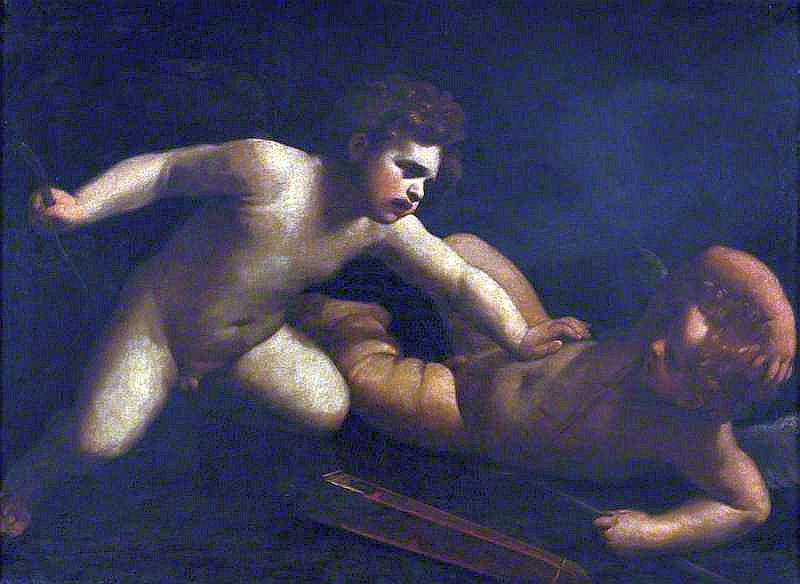
 Christ Church Gallery

“Combat of Beauty and Profane” – Who’s winning?! (Christ Church Gallery, Reni)

The term hasn’t started yet, so you aren’t distracted by any bespectacled, good-looking Harry-Potter-Clones on bicycles and younger visitors will fully concentrate on Potter Paraphernalia in the gift shop of Christ Church College. Deluxe Dobby face-mask anyone? But to be fair,  tourists also praise the true treasures of Christ Church College, as after a guided tour including “Dean’s garden, the cathedral, grounds, and the dining hall. Of course with brilliant explanations. If you don’t mind Christian Stuff” (quoted from trip avisor) “Christian Stuff” at Christ Church – it’s quite a surprise, isn’t?”

We are taking a new turn now, away from meadows and cows, to the city of Oxford. Let our view of the city be accompanied by the Turner painting “View of Oxford”. The artist is known by the name “Turner of Oxford” and he has his grave here. His landscape sketch shows Oxford taken from a higher point and inviting the visiting wanderer to enjoy with him the sight of some identifiable landmarks: The spire of St. Mary the Virgin, the Gothic twin towers of  All Souls College and the dome of  Radcliffe Camera – No, it’s not named after the actor impersonating Harry Potter! – And all the beauty is held by rosy sunset clouds and a wide, blue sky. We do hope to experience such a sunset later the day, as well!

1024px-William_Turner_of_Oxford_-_A_View_of_Oxford_-_Google_Art_Project “A view of Oxford” by W.Turner

Oxford Special – Riding the Oxford Tube (Part I)

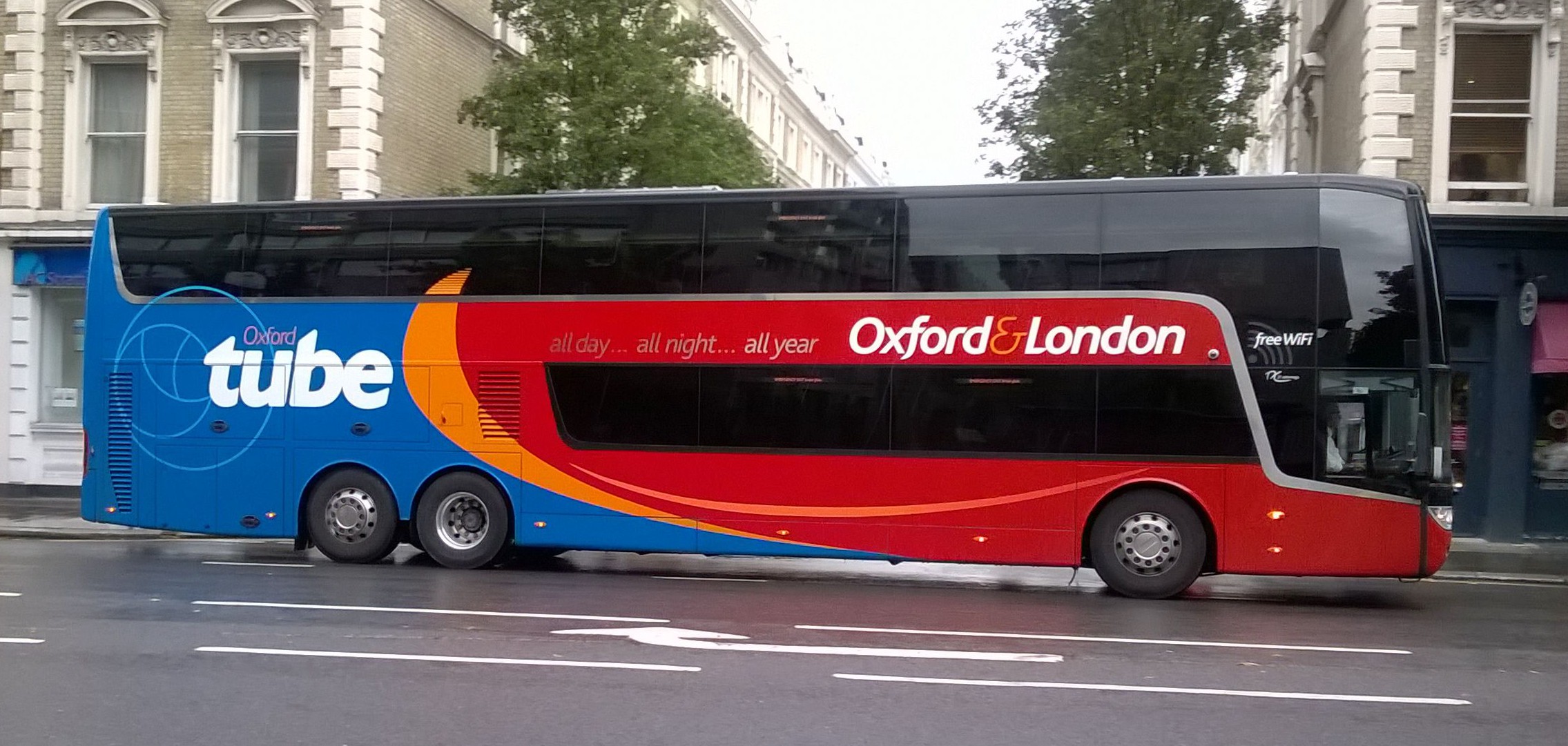
Oxford Tube

The logo is running along both flanks of the coach in plain white letters … all day …  all night … all year… Oxford – London – what a reassuring promise for the traveller from London to Oxford! What kind of motor vehicle will you be riding under this flag of absolute reliability? Well, as a matter of fact it’s a unique crossover – at least as to its naming. When the thing is nearing your bus station in Notting Hill it perfectly resembles a London doubledecker bus but when it pulls in, it proudly displays its name:  “Oxford Tube”. The tube is the tube and not a bus, you are musing, but here we have a  veritable hybrid:

a bus, a tube, a coach. Oxford Tube

Beautifully clad in the colours of the British flag – some curvy, tikka-masala orange added – and displaying a stylish wind-shaped upper deck you feel inspired by the tube’s colourful elegance on this grey and wet Monday morning. And as the door slides open noiselessly you mount the “Oxford tube” without hesitating any longer. Once you’ve settled down upstairs in your comfortable seat, stowed away your umbrella and logged into the free WiFi, you’re hooked! In some 80 minutes your friends will pick you up at St. Clement’s bus station in Oxford. Westward ho!

Meanwhile you look up the words bus, coach, tube in The New Oxford Dictionary.  Let’s add breakfast  to the list because your friends made “a full English breakfast”  the first item on the Oxford itinerary and you want to make sure that full English is compatible with breakfast.

a tube is a tube is a bus

a tube is a tube is a bus

bus – a large motor vehicle carrying passengers by road

coach – a single-decker bus, especially one that is comfortably equipped and used for longer  journeys

tube – a long, hollow cylinder of metal, plastic, glass, etc. for holding or transporting something

breakfast – a meal eaten in the morning, the first of the day

So, I vividly imagine my first meal of the day, a full English breakfast at friendly Oxfork’s, and relax in my long, hollow, double-decker, motorized cylinder, which is comfortably equipped for a longer journey and is holding as well as carrying its load of passengers from London to Oxford by road!

Grace and Beauty

Pleasing Lines

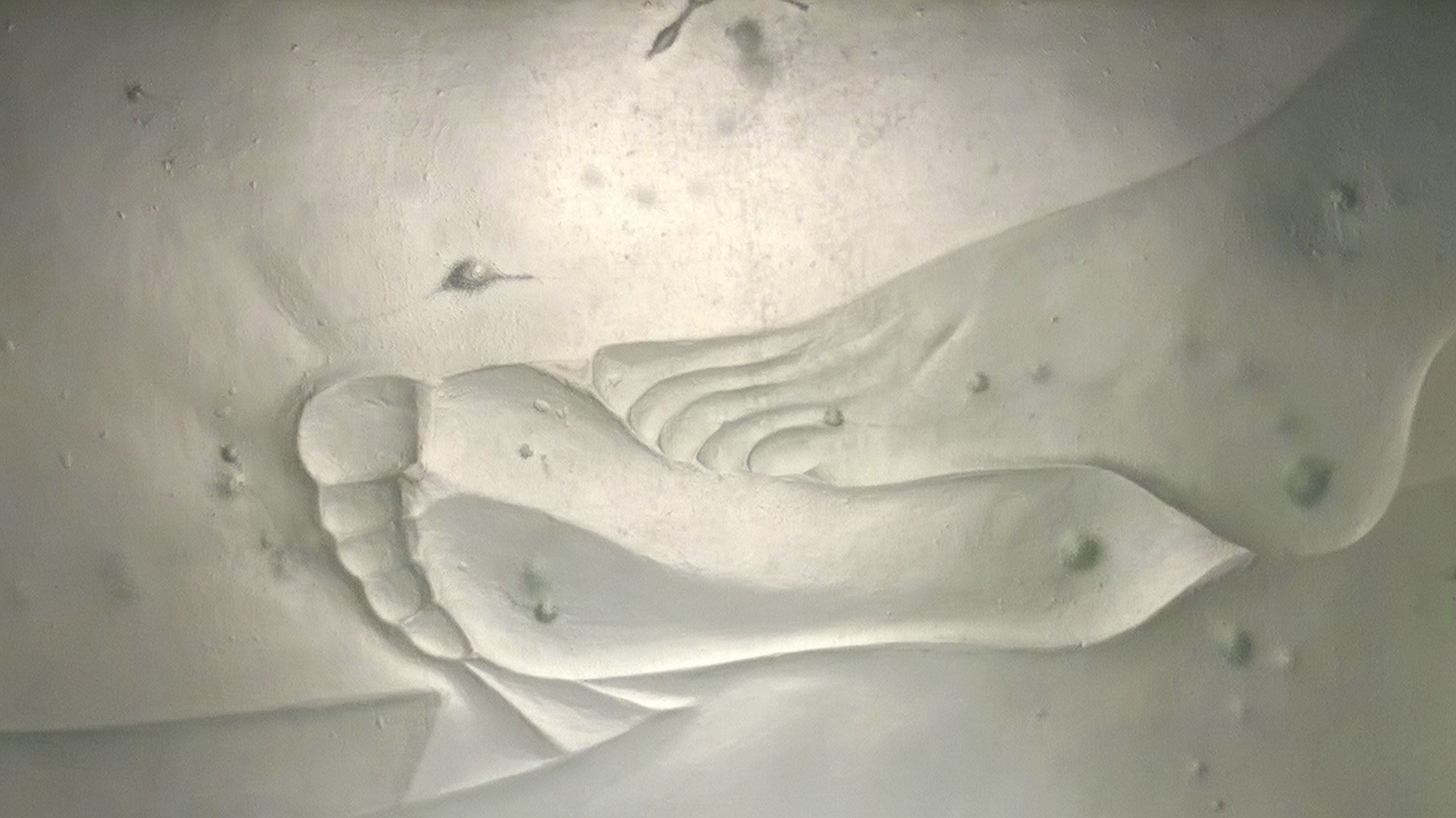
The eye enjoys waving and serpentine lines like in winding walks or meandering rivers. It sweeps along the graceful lines as if it were riding a wave.

Lines of Grace

Feet I Like (Israeli Glass 2015)

And like the surfer needs to taste the  peculiarity of the wave before he will be taken away, the mind takes pleasure in the chase of waving lines. Sometimes you can sail on merely with the lines of grace and beauty.

Sailing On

Chasing Lines  (Lawrence Weiner)

Summer Pleasures – Splash!

Riding the wave

Riding Wild Waters

The fragmented beauty of the surf and the cascading water is caught in a time capsule – just as long as the surfer is splitting the wave open with his ride. A sparkling moment in time and you want to watch it again and again. But then it’s getting somewhat chilly and all of a sudden rain  is coming down in sheets. So, you let your time capsules whoosh down the river – uncaught – and instead seek protection against the summer down-pour under your tartan-colored umbrella. Not exactly a time capsule but an intimate hide-away from further mind-expanding experiences. Walking away from the wild waters, you can’t hear the thundering rush of the wave any longer.

Summer Pleasures

Extra Bavariam nulla vita, et si vita, non est ita!

Extra Bavariam nulla vita, et si vita, non est ita!

You have created your own picture postcard version of Bavarian Eden. You scrutinize the geranium flowerpots, the wooden glow of the village houses, the healthy green of meadows and trees, the hazy and faintly majestic line of alpine peaks and there isn’t a twist in the pastoral tale. Is there? And then you realize what is missing and you yell into the valley: “Where the hell are the cows?!”

Just turn the picture upside down, you stupid urbanist, they are grazing right below the bottom line of your postcard!

Summer Pleasures


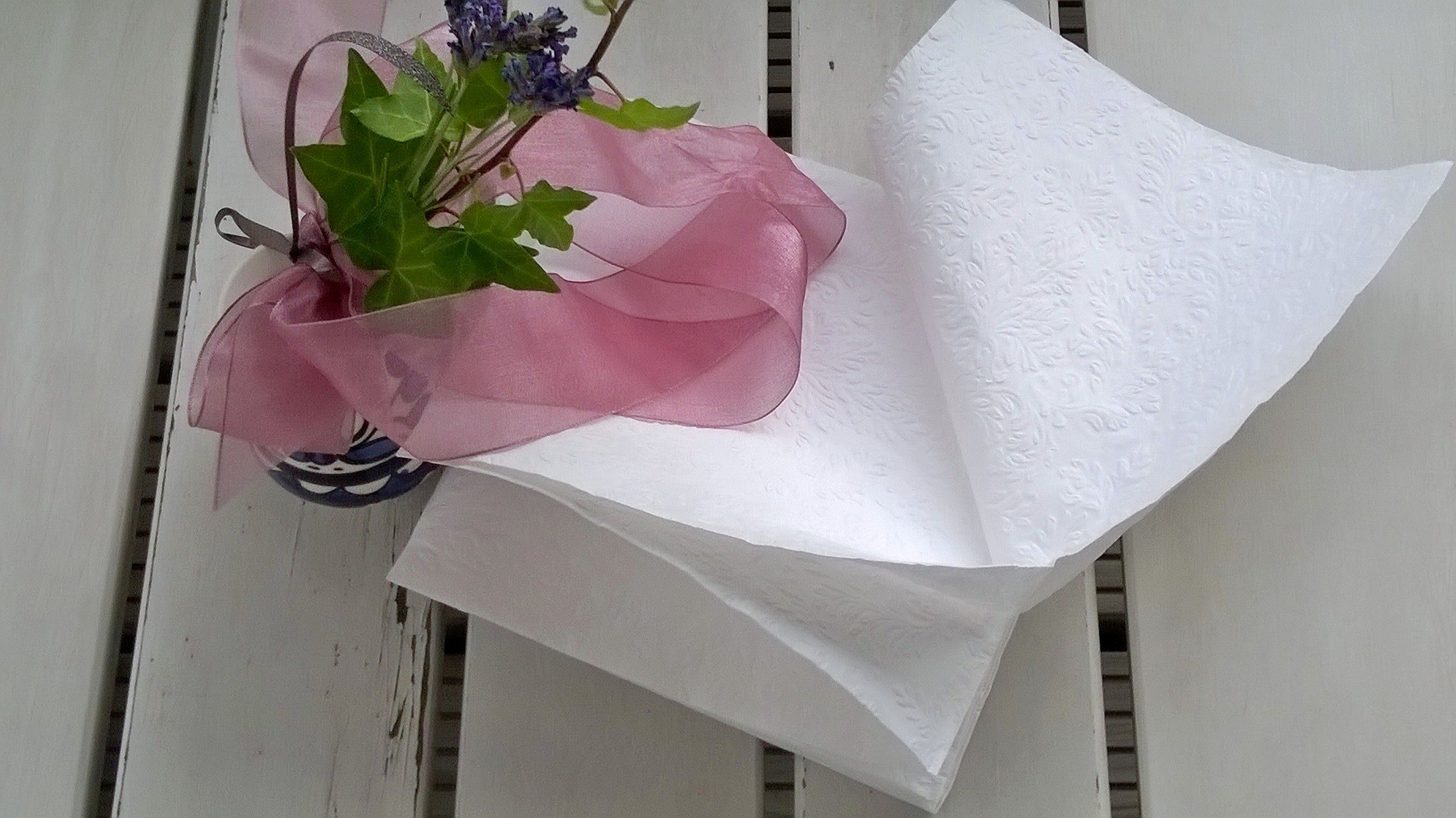
Sitting on the balcony and talking through the summer night with friends. They’ve brought a pretty little present.


Bouquet and napkins

Some wind lifts the napkins gently

Small puff of wind lifts the napkins

Some wind gently takes the napkins away

Big, white butterfly – gently held back by pink ribbon